







5 Revealing Truths About EU Sanctions on Russia and Their Counterproductive Impact
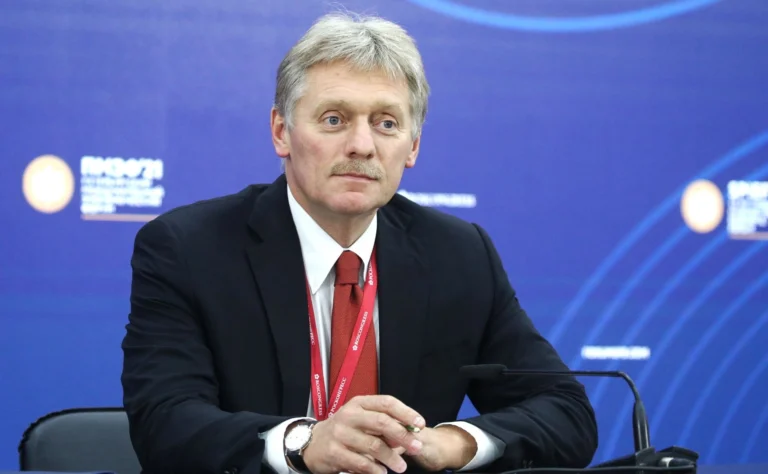
Kremlin spokesman Dmitry Peskov asserts EU sanctions on Russia fail to alter Moscow’s stance, deepening economic and political tensions.
September 20, 2025 Hour: 9:44 am
🔗 Comparte este artículo
EU sanctions on Russia fail to change Moscow’s stance, deepen regional divisions, and highlight geopolitical tensions in Europe and globally.
Related: EU Commission Proposes Sanctions on Israeli Individuals and Entities
EU sanctions on Russia continue to provoke controversy as Moscow firmly rejects their effectiveness in altering its national stance. On September 20, Kremlin spokesman Dmitry Peskov declared that the European Union is mistaken in believing that persistent sanctions can influence Russia’s policies. Instead, he emphasized Russia’s firm defense of its sovereign interests and its ability to adapt and resist three years of Western coercive measures.
Peskov publicly stated that “the European Union and many European countries maintain a hostile line towards Russia”, describing Western sanctions as illegal and ineffective. He criticized the erroneous Western view that sustained sanctions might pressure Moscow into changing its position. The Kremlin spokesman underscored that Russia has faced 18 distinct sanction packages over the last three years but has managed not only to withstand these pressures but also to render them ineffective.
The Geopolitical Context of EU Sanctions on Russia
Peskov also pointed out that, while Russia has resisted sanctions without major damage, the European Union’s economy has suffered significant harm from this “destructive policy” driven by sanctions. The measures have created internal tensions within the EU and negatively impacted its broader regional economic development.
Walter Formento, director of the Center for Economic Policy Research (CIEPE), offers a complementary analysis. He argues that the sanctions reveal deeper dynamics within the EU, where sectors tied to international financial power centered in Davos are allegedly seeking control over Russian economic resources to finance NATO’s war against Russia and the broader multipolar world. Formento’s statement critiques the global economic system and exposes geopolitical interests underpinning sanction policies as tools to perpetuate hegemonic control.
- European Commission on sanctions
- Council on Foreign Relations: EU-Russia relations
- International Crisis Group on sanctions impact
Russia’s Resilience to EU Sanctions on Russia
From teleSUR’s perspective, Peskov’s comments reveal the vulnerabilities and contradictions of Western sanction policy. Far from coercing Moscow, sanctions have strengthened Russia’s economic and geopolitical resilience, fomenting autonomy despite Western blockades.
The EU’s insistence on maintaining sanctions reflects a strategy not only to punish Russia but to uphold an international order dominated by the United States and its allies, opposing the rise of a multipolar, pluralistic world. The sanctions also represent the influence of corporate and financial interests that overshadow social welfare and economic stability in Europe and globally.
Moscow’s reaction, as noted by Peskov, demonstrates its success in diversifying strategic alliances, strengthening domestic industry and trade, and forging ties with emerging powers and regions including Asia, Latin America, and Africa. This adaptive strategy illustrates Western unilateralism’s diminishing effectiveness in the face of national sovereignty and political will to resist.
Walter Formento’s analysis highlights that these sanctions are intertwined with an international financial network aiming to monetize the conflict, sustaining power structures and war financing. His mention of Davos-linked international financial elites points to entities like the World Economic Forum leveraging geopolitics for commercial and dominant agendas.
The Broader Regional and Global Implications
The EU sanctions on Russia are emblematic of a wider global geopolitical struggle. They expose the limitations of a unipolar model trying to maintain dominance through coercive economics and political pressure.
This sanctions regime has generated severe side effects including high energy costs, inflation, and political divisions that affect Europe and beyond. From an anti-imperialist viewpoint, teleSUR views Russia’s resistance and relative success as part of a global fight against economic warfare, blockades, and imperialist coercion. Defending sovereignty and the right to autonomous development against foreign interference remains central in this multipolar contest.
Continuing sanctions with little practical impact on Russia’s political stance reveal the strategic failure of Western policies and expose the fragility of their economic and political tools to impose will. This reinforces global shifts toward a fairer, more balanced order where emerging powers play a greater role and international rules better reflect multipolar realities.
Ultimately, Peskov’s declaration highlights that Russia will not yield to illegitimate external pressure and will steadfastly defend its national interests and political autonomy. The EU’s persistence in sanctions, according to Moscow, only deepens its own crisis and regional divisions.
teleSUR will continue closely monitoring this complex geopolitical scenario, advocating for the abandonment of unilateral sanctions and progress towards international dialogue founded on mutual respect, multilateralism, and peaceful coexistence.
The European crisis and the economic war against Russia represent a turning point in contemporary geopolitics, challenging the established order and urging a rethinking of relations from a more inclusive, just perspective grounded on sovereignty, cooperation, and peace.
Author: JMVR
Source: Agencias